A unique concept
Welcome to the 42 programming campus, where the only constant is change.
A unique concept
The only constant is change
Campus 42 is a free training programme designed to prepare people for the jobs in demand in the labour market.
Rather than focusing on a specific programming language that will quickly become obsolete, 42 provides you with the tools to develop the autonomy you’ll need to tackle the technological changes you’ll face throughout your professional career
In fact, Artificial Intelligence is integrated into the 42 curriculum by design, from the fundamentals of programming through to the development of advanced systems. It is not included simply to follow a trend, but because it is part of the present and future of the technology industry.
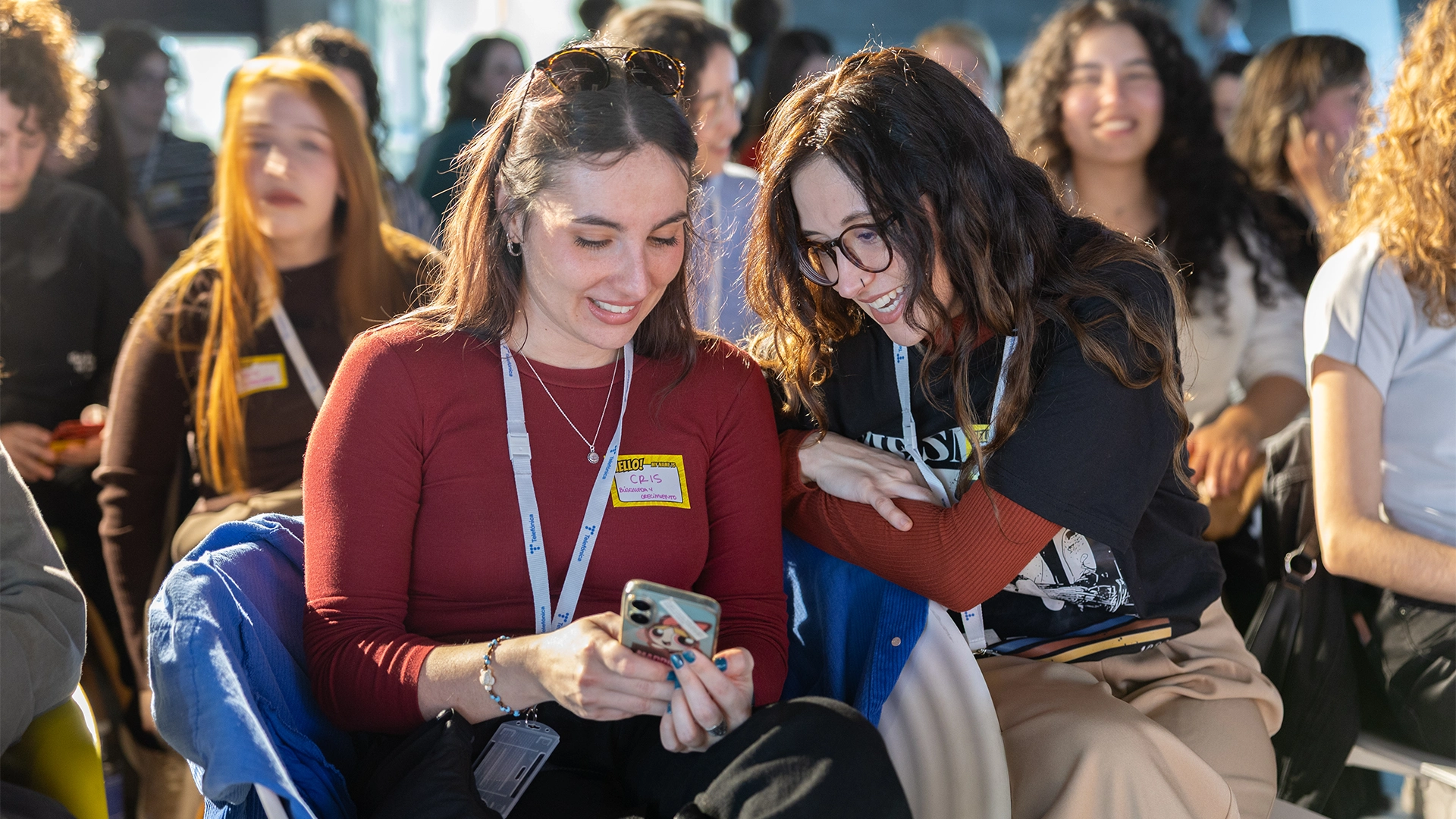
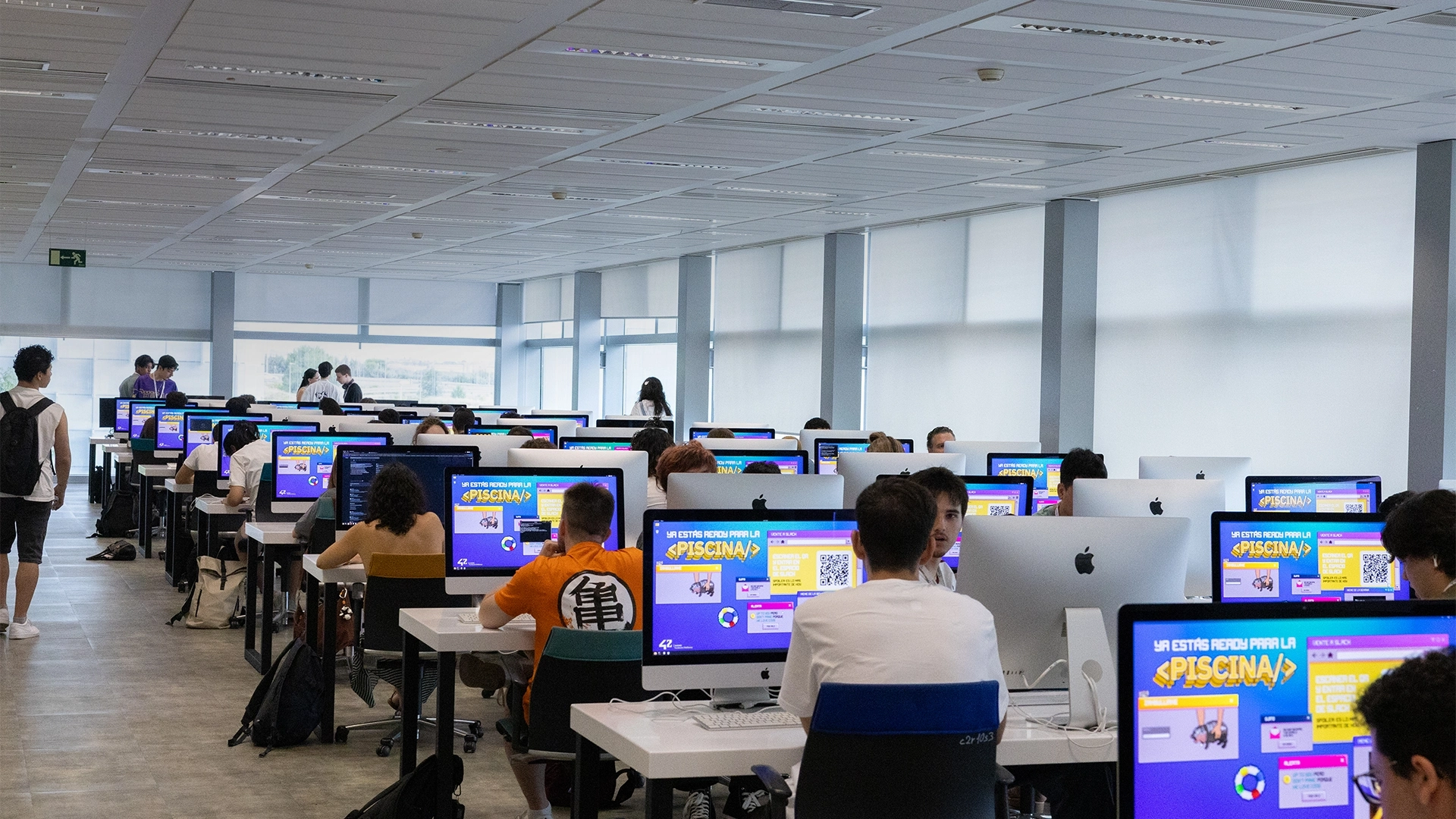
Furthermore, on campus, rather than having to memorise lessons with no practical application, you will work on developing projects and evaluating them collaboratively with other students.
COME AND LEARN HOW TO LEARN
From your very first steps at 42, you’ll have to think for yourself when sitting at a computer. Nobody expects you to be able to do everything straight away; making mistakes isn’t penalised. In fact, mistakes are the best way to learn. At 42, making a mistake is simply an invitation to try again, just like in a video game.
Developing the ability to adapt to change, finding practical solutions to problems, working as part of a team and sharing knowledge are just some of the skills you’ll develop or enhance at 42 campuses.
- #42MadridFTef
- Madrid
Educational experience without limits
You might also be interested in
Frequently asked questions
Artificial Intelligence is not an optional extra or a mere add-on; rather, it is woven throughout 42’s learning curriculum, ranging from fundamental concepts to the creation of architectures for fully autonomous systems. AI is integrated by design and in a progressive manner, not simply to follow a trend. The aim is that, upon completing your studies, you will be able to design, develop and critically evaluate AI-integrated solutions to address the current challenges facing the industry.
You progress through the study plan by completing projects and earning points. With these points you go up through the levels and unlock more projects and branches of specialisation. You can also master different skills and complete missions and achievements.
The original curriculum was created in 2013 by the Campus 42 Paris team, a group of veterans in the field of IT education in France. Since then, it has evolved thanks to contributions from teaching staff across the global network of campuses, cooperation with companies, and even input from students. Every quarter, the teaching committee—made up of teaching staff from all campuses—meets to discuss and implement updates to the curriculum based on current industry trends.
The Common Core is available in Spanish, but it can also be studied in other languages, including English, French, German and Portuguese. Although it isn’t essential to know any English, it’s true to say that most of the information related to programming is in this language. So, if you come to 42, now’s the time to start using it again or study it from scratch. However, this shouldn’t become an obstacle, as there are students on the campus who’ll know English and be happy to help you.
As long as each person needs. We firmly believe that every student is unique and should be allowed to learn at their own pace.
Completion of the ‘Common Core’ is normally achieved within a timeframe of 12 to 18 months maximum.
In the case of specialisations – from level 8 to 21 – this block lasts up to four and a half years.
The ‘Cursus’ also includes two work placement periods.
Yes, lots of them! The campus is a living space where many things happen, including workshops, hackathons, workshops, talks and so on. Our intention is to enable both students and companies to make proposals to generate high-quality training content and thus add value to the campus.
Our doors are always open for our students! Those who’ve completed their training on our campus can return to continue their studies whenever they like. One of the differential values of the method at 42 is the community.
The 42 method is based on peer learning, during which the students learn and face challenges on their own and in teams with other students.
As we mentioned above, 42 is based on peer-to-peer learning, during which the environment obliges you to learn how to learn, one of the most important skills that you’ll need to develop. However, there’s a pedagogical team that makes sure that the learning environment functions and that everyone makes progress.
It’s an educational model that enables students to learn from each other through collaborative work, sharing and overcoming challenges and, above all, evaluating each other.